

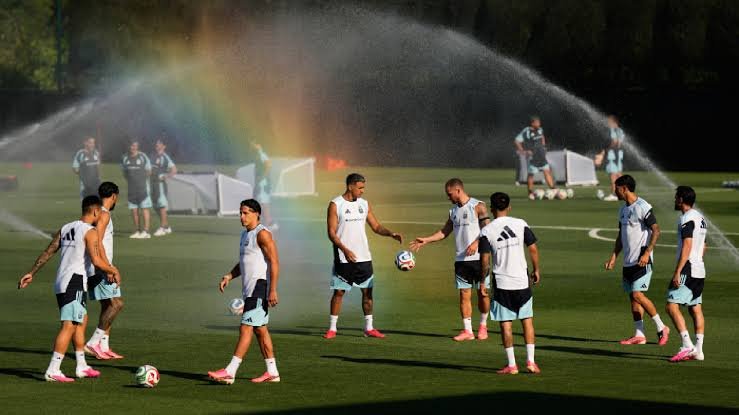
The Football World Cup is the most prestigious and widely celebrated sporting event in the world. Organized every four years, it brings together the best national football teams from across the globe to compete for the ultimate prize in international football. With billions of viewers tuning in and millions of fans traveling to host nations, the tournament transcends sport and becomes a global celebration of culture, passion, and unity.
Whether you’re a lifelong football enthusiast or someone watching the tournament for the first time, understanding how the Football World Cup works can greatly enhance your experience. This guide covers everything from the tournament’s history and format to its significance and unforgettable moments.
A Brief History of the Football World Cup
The inaugural Football World Cup took place in 1930 in Uruguay, with just 13 participating teams. Uruguay emerged as the first champion after defeating Argentina in the final. Since then, the tournament has grown tremendously in size, popularity, and prestige.
Over the decades, the World Cup has witnessed legendary players, iconic matches, and unforgettable moments that have shaped football history. The tournament has become a symbol of sporting excellence and international unity, showcasing the world’s finest talent every four years.
The competition has only been interrupted twice—in 1942 and 1946—due to World War II. Since then, it has been held consistently, becoming one of the most anticipated sporting events on the global calendar.
How Teams Qualify
Qualifying for the Football World Cup is an achievement in itself. National teams compete in regional qualification tournaments organized by their respective continental football confederations.
These confederations include:
- Europe
- South America
- North and Central America
- Africa
- Asia
- Oceania
Each region receives a certain number of qualification spots based on its competitiveness and representation. The host nation automatically qualifies for the tournament, while the remaining teams earn their place through months or even years of qualifying matches.
Tournament Format
The modern Football World Cup features an expanded format with multiple stages designed to test teams against the world’s best competition.
Group Stage
The tournament begins with the group stage, where participating teams are divided into groups. Each team plays against every other team in its group. Teams earn:
- 3 points for a win
- 1 point for a draw
- 0 points for a loss
The top teams from each group advance to the knockout stage based on their points, goal difference, and goals scored.
Knockout Stage
Once the group stage concludes, the competition enters the knockout rounds. Every match becomes an elimination game, meaning the losing team is immediately eliminated.
If a knockout match ends in a draw after regular time, extra time is played. If the score remains tied, the winner is determined through a penalty shootout.
The knockout stage typically includes:
- Round of 16 or Round of 32
- Quarterfinals
- Semifinals
- Third-place playoff
- Final
The team that wins the final is crowned Football World Cup Champion.
Why the World Cup Matters
The Football World Cup is much more than a sporting competition. It is a global cultural event that unites people from different countries, languages, and backgrounds.
For players, representing their nation at the World Cup is considered one of the highest honors in football. Winning the tournament often defines a player’s legacy and secures their place in football history.
For fans, the Ipl 2026 creates unforgettable memories, from dramatic goals and stunning upsets to emotional celebrations and inspiring underdog stories.
Legendary Teams and Players
Several nations have built remarkable World Cup legacies through consistent performances and championship victories.
Countries such as Brazil, Germany, Italy, Argentina, France, and Uruguay have all enjoyed significant success throughout the tournament’s history.
The World Cup has also introduced the world to legendary footballers whose performances became iconic. These players have inspired generations with their extraordinary skill, leadership, and determination.
Every tournament also produces new stars, giving young players the opportunity to shine on football’s biggest stage.
Memorable World Cup Moments
The Football World Cup has delivered countless unforgettable moments over the years.
Some of the most memorable include:
- Stunning last-minute goals.
- Incredible penalty shootouts.
- Historic underdog victories.
- Record-breaking individual performances.
- Spectacular team comebacks.
- Emotional championship celebrations.
These moments become part of football folklore and are remembered by fans for decades.
The Role of Technology
Modern World Cups increasingly rely on technology to improve fairness and accuracy.
Technologies such as goal-line technology and the Video Assistant Referee (VAR) help officials make more accurate decisions during matches.
While technology has sparked debate among fans and experts, it has significantly reduced controversial refereeing errors and improved the integrity of the competition.
Economic and Cultural Impact
Hosting the Football World Cup can have a major impact on a country’s economy and global image.
Host nations invest in:
- Stadium construction
- Transportation systems
- Hotels and tourism infrastructure
- Public facilities
The tournament attracts millions of international visitors, generating revenue through tourism, hospitality, broadcasting, and sponsorship.
Beyond economics, the World Cup allows countries to showcase their culture, traditions, cuisine, and hospitality to a worldwide audience.
Tips for First-Time Viewers
If you’re watching the Football World Cup for the first time, here are a few tips to maximize your enjoyment:
- Learn the tournament format so you understand what each match means.
- Follow your favorite national team while also watching matches featuring top-ranked nations.
- Pay attention to young emerging players who could become future stars.
- Watch knockout matches, where the excitement and drama reach their peak.
- Enjoy the atmosphere created by passionate supporters from around the world.
Even casual viewers often become lifelong football fans after experiencing the excitement of a World Cup.
The Future of the Football World Cup
The Football World Cup continues to evolve with larger tournaments, new technologies, and growing global participation. More nations now have opportunities to compete at the highest level, making the competition more diverse and exciting than ever before.
As football continues to expand worldwide, future tournaments are expected to attract even larger audiences, introduce innovative fan experiences, and further strengthen the game’s position as the world’s most popular sport.
Conclusion
The https://cricktalks.in is more than a championship—it is a celebration of talent, teamwork, passion, and international unity. Every edition creates unforgettable stories, introduces new heroes, and reminds the world why football is often called “the beautiful game.”
Whether you’re cheering for your home nation, supporting your favorite players, or simply enjoying world-class football, the World Cup offers an experience unlike any other sporting event. Understanding its history, format, traditions, and significance allows every fan to appreciate the excitement and drama that make the Football World Cup the pinnacle of international football.